
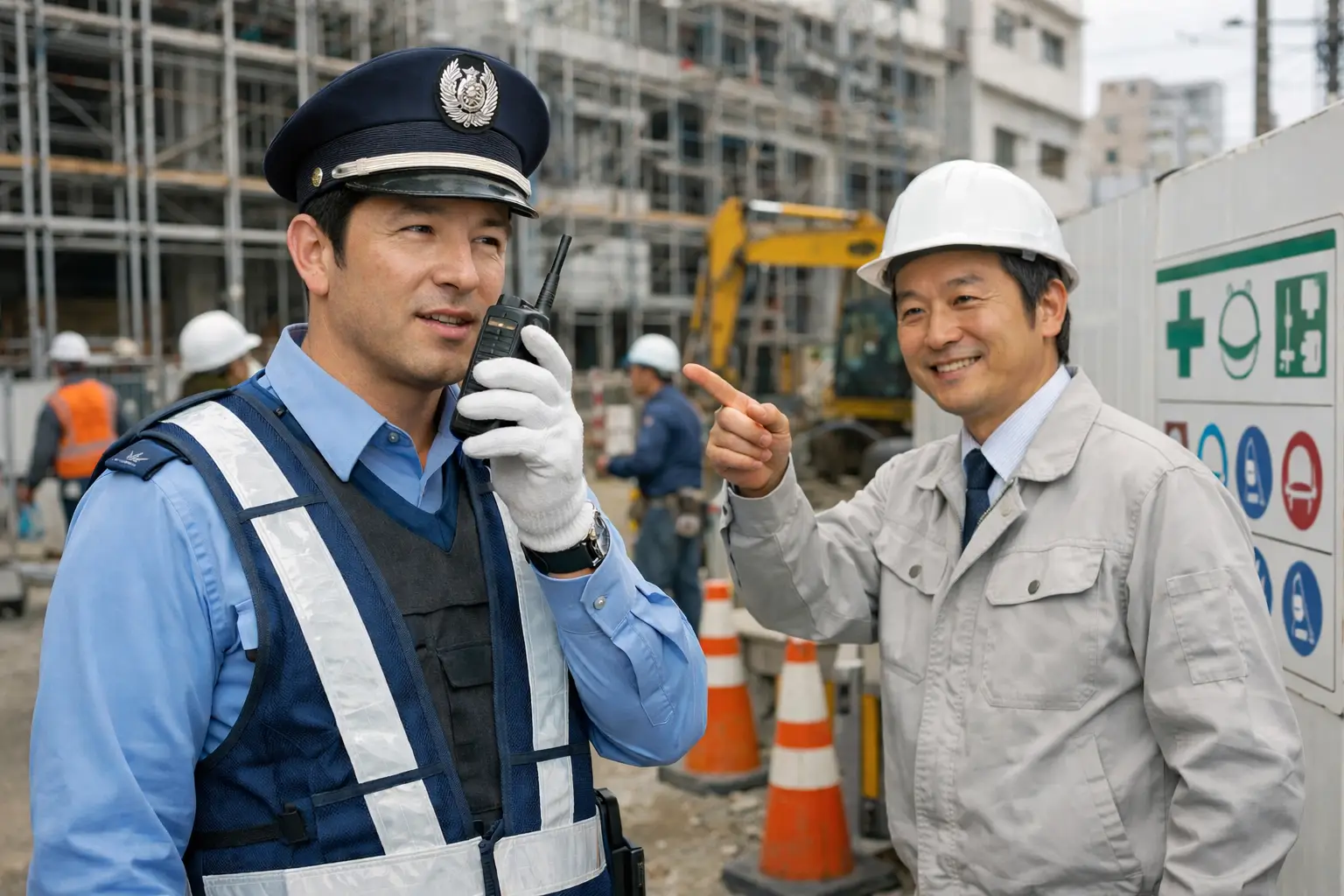
Case Study of Accepting Foreign Human Resources at Construction Site Security: Keys to Success
Based on a successful case of accepting foreign human resources for security duties at a construction site, introduces effective training programs and methods for fostering safety awareness.
Article Content
Background: Why Foreign Workers Are Being Introduced at Construction Security Sites
Japan’s construction industry has been facing a long-term labor shortage for decades, driven by an aging workforce and declining number of young workers. In response, companies have increasingly relied on foreign workers through systems such as the Technical Intern Training Program and the Specified Skilled Worker system.
As of 2024, more than 2.3 million foreign workers are active across industries in Japan, helping to fill workforce gaps caused by demographic decline.
Within this context, construction site security—especially traffic control and safety monitoring—has become a key area where foreign personnel are being actively introduced.
Case Overview: A Construction Company’s Successful Implementation
A mid-sized construction company in the Tokyo metropolitan area faced chronic shortages of security staff, particularly during peak project periods. To address this, the company began hiring foreign workers under the Specified Skilled Worker framework.
The company recruited workers primarily from Southeast Asia and implemented a structured onboarding program focused on safety, communication, and operational understanding.
Result: Within one year, the company successfully stabilized staffing levels, reduced overtime for existing workers, and maintained safety standards across multiple sites.
Key Challenge: Safety Awareness and Communication Gaps
At the initial stage, the company encountered several challenges:
- Difficulty understanding site-specific safety rules
- Limited Japanese language proficiency for real-time instructions
- Lack of familiarity with Japanese construction culture and expectations
These issues are common across the industry, where insufficient training and communication gaps can directly affect productivity and safety outcomes.
Success Factor 1: Structured Training Programs
The company introduced a multi-step training program tailored to foreign workers:
Basic Safety Training
Focused on hazard recognition, use of equipment, and emergency procedures using visual materials and demonstrations.
Job-Specific Training
Hands-on instruction for traffic control, signaling techniques, and coordination with construction teams.
Step-by-Step Skill Development
Gradual increase in responsibility, allowing workers to build confidence over time.
Success Factor 2: Language and Communication Support
Recognizing that communication is critical in security operations, the company implemented:
- Simple Japanese phrase training for daily operations
- Radio communication practice with standardized phrases
- Translated manuals and visual guides
This approach significantly reduced miscommunication and improved response speed during operations.
Success Factor 3: Mentorship and On-Site Support
Each foreign worker was paired with an experienced Japanese supervisor or senior guard.
This mentorship system provided:
- Real-time guidance on-site
- Immediate feedback and correction
- Emotional support and workplace integration
Such support systems are essential, as retention of foreign workers remains a key challenge in Japan, with many leaving due to poor integration or working conditions.
Success Factor 4: Building a Culture of Inclusion
The company also focused on creating an inclusive work environment:
- Encouraging open communication regardless of language level
- Providing cultural orientation sessions
- Organizing team-building activities
This helped foster trust and collaboration between Japanese and foreign staff.
Measurable Outcomes
After implementing these initiatives, the company observed:
- Improved safety compliance across sites
- Higher retention rates among foreign workers
- Reduced dependency on last-minute staffing solutions
- Enhanced overall operational efficiency
Lessons Learned: What Other Companies Can Apply
This case highlights several important lessons:
- Training must be practical and tailored to real job scenarios
- Language support is directly linked to safety and performance
- Mentorship accelerates adaptation and builds confidence
- Workplace culture plays a critical role in retention
Future Outlook
As Japan continues to expand its acceptance of foreign workers and reforms its labor systems, the role of foreign personnel in construction security will grow further.
Companies that proactively invest in training, communication, and integration will be better positioned to succeed in this evolving environment.
Conclusion
The successful integration of foreign workers in construction site security is not simply about filling labor gaps. It requires a comprehensive approach that combines training, language support, and workplace inclusion.
By adopting these strategies, companies can not only address labor shortages but also build a more resilient, diverse, and effective security workforce for the future.