
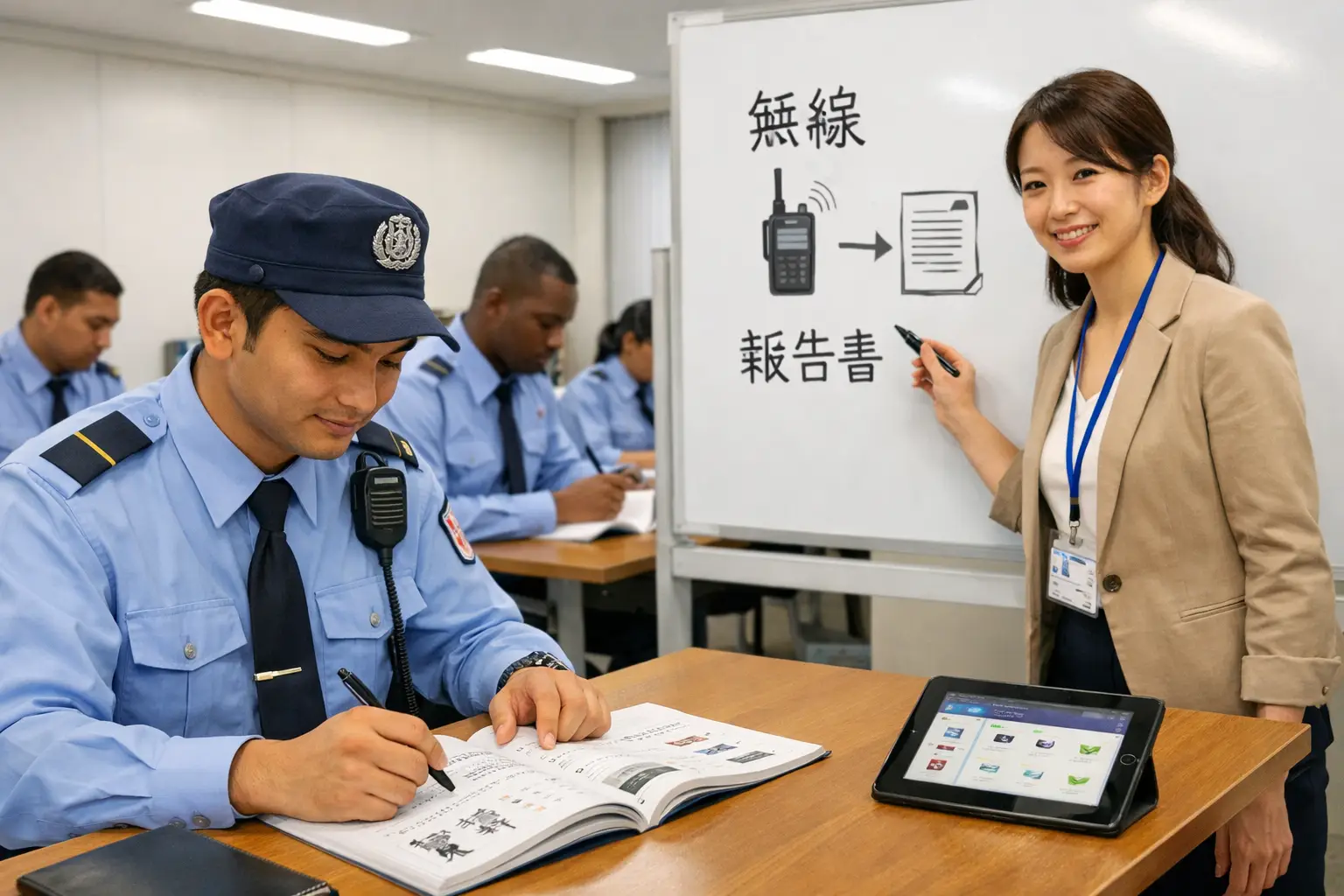
The Importance of Japanese Language and Technical Vocabulary Learning Support for Foreign Security Guards
Explains the impact of post-hiring Japanese language learning support on retention rates in the security industry based on survey results. Also introduces examples of learning programs specialized in radio communication and report writing.
Article Content
Why Language Support Is Becoming Critical in Japan’s Security Industry
Japan's security industry is currently facing a major transformation driven by labor shortages and globalization. With over 2.3 million foreign workers now active across industries in Japan, security companies are increasingly turning to international talent to fill workforce gaps.
At the same time, the industry itself is expanding while struggling to secure domestic workers. This creates a new challenge.
How can foreign security guards perform safely and effectively in a Japanese-language work environment?
The Reality: Language Barriers Directly Affect Safety
Security work is not just about physical presence. It requires accurate communication with team members, real-time response to emergencies, and proper documentation and reporting. In Japan, these tasks rely heavily on precise Japanese language usage, especially radio communication, incident reports, and on-site instructions.
Even small misunderstandings can lead to delayed responses, miscommunication during emergencies, and increased risk on-site. This makes language proficiency not just a skill, but a safety requirement.
Industry Structure Makes Language Training Even More Important
The Japanese security sector is large but structurally demanding. Over 70% of security guards are aged 50 or older, training requirements are relatively limited (around 20 hours annually), and labor shortages are pushing companies to hire faster.
This combination often results in insufficient onboarding for foreign staff, lack of specialized language training, and heavy reliance on on-the-job learning. Without structured language support, foreign workers are more likely to struggle or leave early.
How Language Support Improves Retention
Providing Japanese learning support after hiring has a measurable impact.
1. Increased Confidence
Workers who understand instructions clearly feel more secure and capable.
2. Better Workplace Relationships
Language enables smoother communication with supervisors and colleagues, improving team cohesion.
3. Reduced Turnover
Industries with structured training programs tend to see better retention rates, especially in physically demanding roles. In global security practices, professionals with foreign language ability are consistently shown to have better career opportunities and performance outcomes.
Effective Learning Support Programs (Best Practices)
Leading security companies are now introducing specialized programs tailored to real work scenarios.
Radio Communication Training
Practice with real phrases used in patrol and traffic control, with emphasis on clarity and speed.
Report Writing Support
Templates for incident reports and vocabulary training for formal written Japanese.
On-Site Roleplay Training
Simulated emergency scenarios and communication drills with supervisors.
Multilingual Support Materials
Manuals translated into native languages and visual-based instruction for quick understanding.
The Role of Technology in Language Learning
Some companies are also adopting digital tools such as mobile learning apps for security terminology, voice-based training for radio communication, and AI-assisted translation tools for reports. This aligns with the broader industry trend toward technology integration in security operations, including AI and digital systems.
Future Outlook: Language Support as a Competitive Advantage
As foreign hiring continues to grow, language training will no longer be optional; it will become a standard requirement. Companies that invest in structured Japanese training, practical vocabulary programs, and continuous learning support will benefit from higher retention rates, improved service quality, and stronger client trust.
Conclusion
Japan's security industry is entering a new era where diversity and communication are key. Foreign security guards play an essential role in supporting the workforce, but their success depends heavily on language support. Providing effective Japanese and technical vocabulary training is not just about education. It is about safety, efficiency, and long-term business success. Companies that recognize this early will be better positioned to lead the next generation of the security industry.