
Japan's Security Guard Shortage and Aging Population—What's Happening on the Front Lines Now?
An explanation of the severe labor shortage and aging population issues in Japan's security industry. We discuss the background of rising average age and hiring difficulties, as well as the latest countermeasures including AI and foreign hiring.
Article Content
Why is the security industry attracting attention now?
Currently, Japan's security industry is at a major turning point. The biggest reasons are the "severe labor shortage" and "rapid aging."
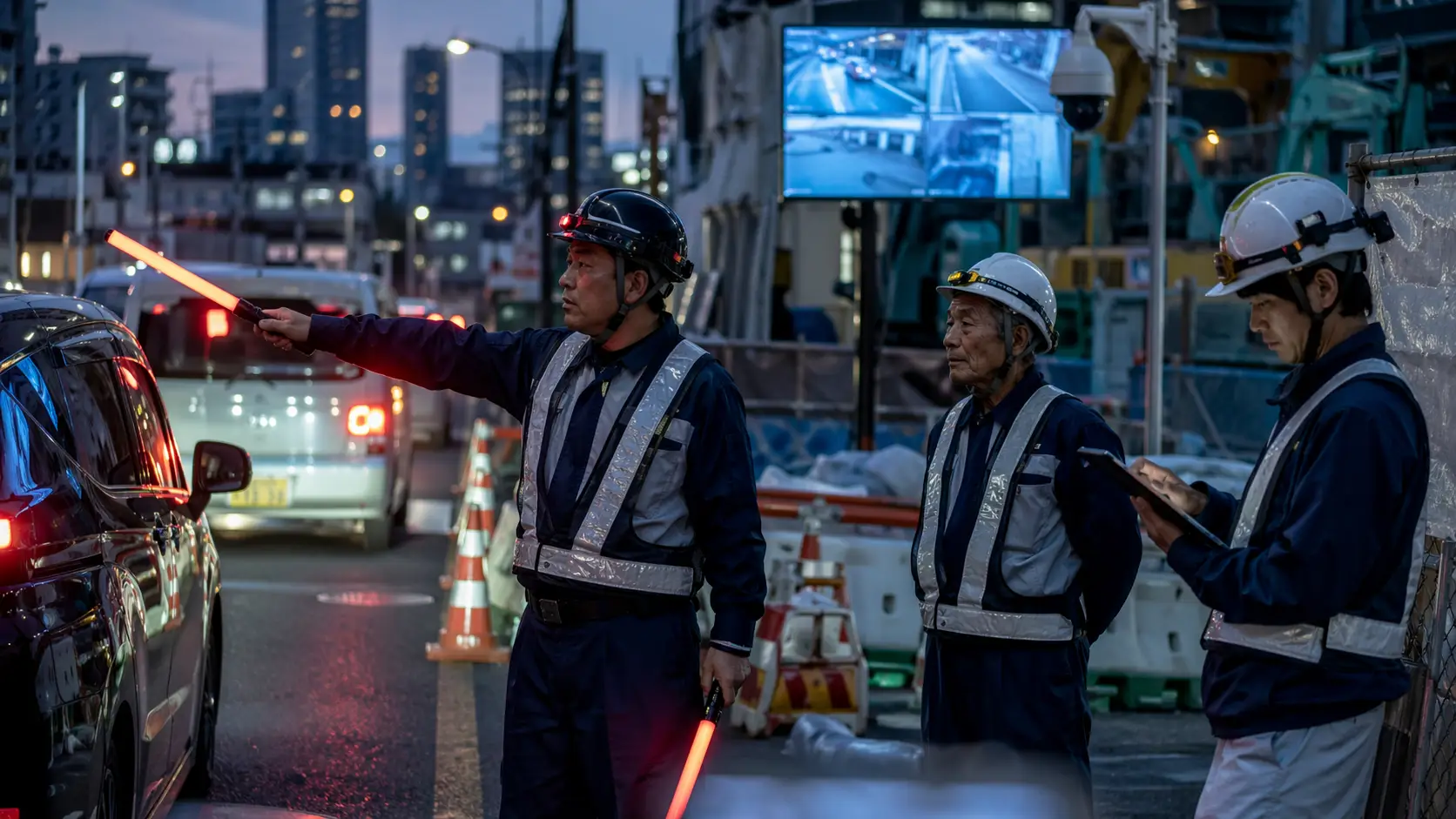
As of 2023, Japan has approximately 420,000 security guards, but their average age exceeds 52 and continues to rise year by year. Furthermore, security guards aged 70 and older account for a certain percentage, making it clear that the entire industry is aging.
Background of the labor shortage
Several factors contribute to the labor shortage in the security industry.
① Labor force decline due to the declining birthrate and aging population
The working-age population is decreasing across Japan, and the service industry as a whole is experiencing chronic labor shortages.
② Decrease in applications from younger generations
The security industry has a strong image of being "tough, monotonous, and low-paying," leading to a slump in applications from younger people.
③ High turnover rate
Due to on-site burdens and night shifts, the retention rate remains low. Not only securing human resources but also "retention" has become a major challenge.
Real problems occurring on the front lines
The labor shortage has a direct impact on the front lines.
- Shifts cannot be filled
- Increased burden per person
- Decline in quality due to insufficient training
In fact, reports indicate that chronic staffing shortages are leading to a "decline in security quality" and an "increase in hiring costs."
Three countermeasures gaining attention now
1. Expanding the hiring of foreign security guards
To compensate for the labor shortage, the utilization of foreign human resources is progressing. Particularly in urban areas, this also aligns with the need for multilingual support.
2. Introduction of AI and surveillance systems
Efforts to reduce reliance on manpower are accelerating through AI cameras and remote monitoring.
- Reduction in staffing
- Improved surveillance accuracy
- Cost reduction
There are cases where the introduction of AI has achieved a reduction of over 200 working hours per month.
3. Expansion of "on-demand" security services
Recently, there has been an increase in "same-day response" security companies that handle sudden vacancies or short-term projects. This is a new business model that addresses issues such as:
- Sudden vacancies at construction sites
- Unexpected staffing shortages at events
The market is not shrinking, it's "growing"
Interestingly, while there are many challenges, the market itself is expanding. Japan's security market is growing year by year, and due to the influence of cybersecurity and DX, it is predicted to expand further in the future.
In other words:
People are lacking, but demand is increasing
This is the "supply-demand gap" that is occurring.
The future key is "Human Resources × Technology"
What will be important in the future security industry is the combination of:
- Diversification of human resources (foreign nationals, women)
- Improvement of working styles
- Utilization of technology
In particular, it is believed that the transition from the traditional "mass manpower" type to "hybrid security (people + AI)" will progress.
Conclusion
Japan's security industry is currently undergoing major changes:
- Aging population
- Labor shortage
- Increasing demand
However, this also means:
It is also a new business opportunity
What will be required of security companies from now on is not merely providing personnel, but services equipped with:
"Flexibility, Speed, and Technology"
Only companies that can adapt to this change will survive in the future market.