
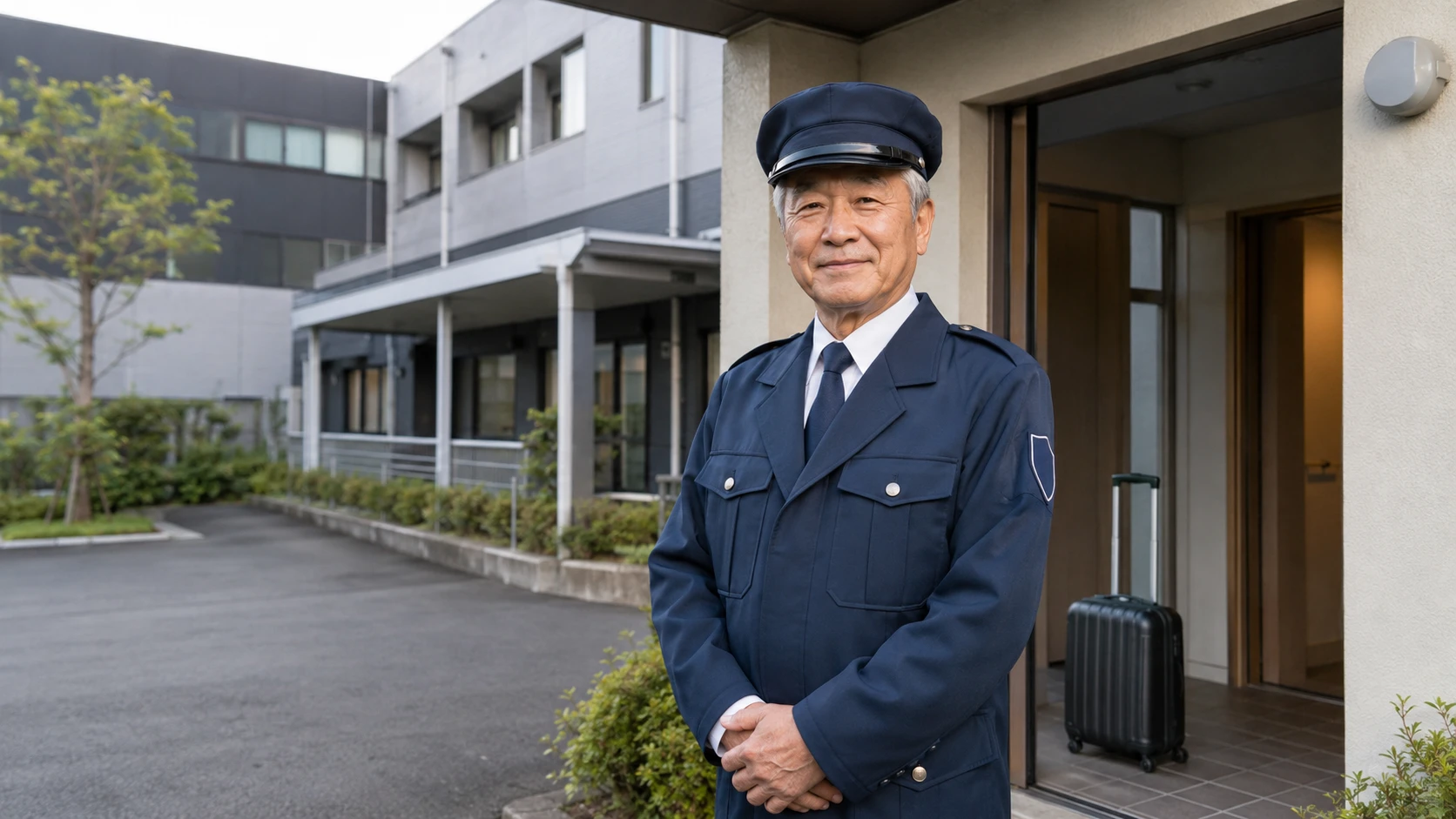
How Seniors Can Choose Security Guard Jobs with Dormitory in Japan: Benefits and Key Points
Security guard jobs with dormitory support can be a practical option for seniors in Japan who want to secure both work and housing. This guide explains the benefits, risks, job types, and key points to check before applying.
Article Content
Why are security guard jobs with dormitory support attracting attention among seniors?
In recent years, security guard jobs with dormitory support have become an attractive option for seniors in Japan. For people in their 60s and 70s who want to find both work and housing at the same time, reduce living costs, or move from a rural area to a city for work, dormitory-provided security jobs can be a realistic choice.
The security industry has ongoing demand in areas such as facility security, traffic guidance security, event security, and parking security. Some companies offer jobs with dormitories, company housing, or live-in options, and some of these positions welcome senior workers.
However, dormitory-based jobs are convenient only when the conditions are clear. Before applying, it is important to check dormitory rent, room facilities, work location, commuting time, working hours, and move-out rules. Otherwise, workers may feel that the actual conditions are different from what they expected.
What is a security guard job with dormitory support?
A security guard job with dormitory support is a job where the security company provides housing, such as a dormitory or company apartment, for employees. Job listings may use phrases such as:
- Dormitory provided
- Company housing available
- Live-in work available
- Immediate move-in possible
- Private room available
- Furniture and appliances included
The type of housing differs depending on the company. Some dormitories offer private rooms, while others have shared facilities. Some companies rent apartments and provide them as company housing. For senior workers, comfort, safety, and commuting burden are especially important, so housing conditions should always be checked carefully.
Benefits of dormitory-provided security jobs for seniors
1. Easier to secure both work and housing
The biggest advantage of dormitory-provided jobs is that workers can find both employment and housing at the same time. This is helpful for people who want to relocate, change their living situation, or work in a city away from their current home.
2. Lower initial living costs
Renting a regular apartment in Japan may require initial costs such as deposit, key money, agency fees, and furniture or appliance purchases. In contrast, dormitory-provided jobs may allow workers to start a new life with lower upfront costs.
If the dormitory includes furniture and appliances, workers may only need basic daily items such as bedding, clothes, and personal supplies.
3. Easier commuting in some cases
When a company provides dormitory housing, it may assign workers to sites that are easier to reach from the dormitory. For senior workers, long commutes can become physically stressful, so commuting time is an important factor.
4. Easier to manage living expenses
In some cases, dormitory fees are deducted directly from salary, making monthly expenses easier to manage. If the dormitory rent is lower than the local market rate, workers may also be able to reduce their living costs.
5. Easier to work in a new area
Dormitory-provided jobs can make it easier to move to a new region for work. This can increase job options, especially for seniors interested in facility security in urban areas or traffic guidance security near construction projects.
Common types of security work for seniors
Senior-friendly security jobs vary depending on physical ability, experience, and work preference. The most common types include the following:
1. Facility security
Facility security is performed at office buildings, shopping centers, apartment buildings, hospitals, factories, and warehouses. Main duties include reception, patrols, entrance control, and security camera monitoring.
Many facility security jobs are indoors, so they are less affected by weather. This makes them a popular option for senior workers.
2. Traffic guidance security
Traffic guidance security involves guiding vehicles and pedestrians safely around roadwork sites and construction areas. This work is usually outdoors and may require physical stamina, but some jobs offer relatively high daily pay.
3. Parking lot security
Parking lot security involves guiding vehicles at commercial facilities, event venues, and large parking areas. Since this role often involves communication with drivers and visitors, it is suitable for people who can respond politely and calmly.
4. Night security
Night security involves patrolling buildings and monitoring facilities during nighttime hours. Seniors who are comfortable working at night may be able to increase income through night-shift allowances. However, health management and sleep routines are very important.
Important points to check before choosing a dormitory-provided security job
1. How much is the dormitory fee?
The first point to check is the dormitory fee. Confirm whether the dormitory is free, partially subsidized, or charged monthly. Also check whether utilities, maintenance fees, or management fees are separate.
2. Is the room private or shared?
For seniors, having a comfortable place to rest is very important. Confirm whether the room is private or shared, and whether the bathroom, toilet, kitchen, and laundry area are shared.
3. Are furniture and appliances included?
Check whether the room includes a refrigerator, washing machine, air conditioner, microwave, bedding, and other basic items. Even if a listing says “furniture and appliances included,” it is important to confirm exactly what is provided.
4. How far is the worksite from the dormitory?
A dormitory may be available, but if the worksite is far away, commuting can become difficult. Check travel time, transportation expenses, and whether direct commuting to the site is allowed.
5. What are the move-out rules after resignation?
Since the dormitory is usually connected to employment, workers may need to move out after leaving the company. Confirm how many days are allowed after resignation before moving out.
6. Can you enter the dormitory during training?
Security guards in Japan must complete training before starting work. Check whether you can move into the dormitory during the training period, whether training wages are paid, and how transportation to the training location is handled.
Checklist for seniors before applying
Before applying for a dormitory-provided security job, check the following points:
- How much is the dormitory fee?
- Are utilities and management fees separate?
- Is the room private or shared?
- Are furniture and appliances included?
- How far is the dormitory from the worksite?
- Are transportation expenses paid?
- Is the work daytime or nighttime?
- Is the work physically manageable?
- Is training provided?
- Can beginners apply?
- What are the move-out rules after resignation?
For seniors, it is important not only to look at salary, but also to check whether the job is safe, sustainable, and comfortable to continue.
Recommended features of dormitory-provided security jobs for seniors
1. Jobs with private dormitory rooms
If you value rest and privacy, choose a job with a private dormitory room. A private room makes it easier to maintain your lifestyle and recover properly after work.
2. Facility security positions
If you are concerned about physical burden, facility security may be a good option. Indoor worksites with patrol, reception, and monitoring duties are often easier to manage than outdoor worksites.
3. Jobs starting from three days per week
If full-time work feels difficult at first, look for jobs that allow work from three days per week. This makes it easier to adjust your schedule according to your health and lifestyle.
4. Companies with training and support
If you are new to security work, choose a company with proper training and on-site support. It is safer to work for a company that provides guidance from senior staff instead of sending beginners to worksites without enough support.
5. Jobs with no fixed retirement age or age restriction
If you want to continue working in your 60s or 70s, check for phrases such as “no retirement age,” “age not required,” or “seniors active.” Some companies focus more on health, motivation, and reliability than age.
Things to consider before live-in security work
Dormitory-provided jobs are convenient, but they also make work and daily life closely connected. Before applying, consider whether this lifestyle matches your needs.
- Can you rest properly on your days off?
- Are supermarkets, clinics, and daily services nearby?
- Can you easily stay in contact with family?
- Can you live there long term if needed?
- Can you consult the company if your health condition changes?
For senior workers, the living environment is just as important as the job itself. If possible, check photos, room layout, and surrounding facilities before applying.
Frequently asked questions
Q. Can people in their 60s apply for security guard jobs with dormitory support?
Yes, some jobs are open to applicants in their 60s. Check listings for phrases such as “seniors welcome,” “people in their 60s active,” “no age restriction,” or “no experience required.”
Q. Can beginners work as security guards with dormitory support?
Yes, many security jobs accept beginners. Before starting work, employees usually receive training to learn basic rules, safety procedures, and job responsibilities.
Q. Are there security jobs with free dormitories?
Some jobs may offer free dormitories or partial rent support. However, even if the dormitory is free, utilities or management fees may still apply, so details should be confirmed before applying.
Q. Is live-in security work difficult?
The difficulty depends on the worksite. Outdoor traffic guidance may require more physical strength, while facility security may be calmer and easier to continue. Choosing a job that matches your health and stamina is important.
Conclusion
Dormitory-provided security guard jobs can be a strong option for seniors who want to secure both work and housing. They may help reduce initial living costs, make relocation easier, and provide a more stable lifestyle.
However, it is important to check dormitory fees, room conditions, commuting distance, work duties, and move-out rules before applying. Choosing only based on salary or free housing can lead to problems later.
If you are looking for a security guard job with dormitory support, remember this point:
👉 Check both “work comfort” and “living comfort.”
By comparing not only salary but also housing conditions and job duties, seniors can find safer, more comfortable, and more sustainable live-in security work.